
What is the Difference Between Water-Based and Solvent-Based Mastic?
When it comes to sealing HVAC ductwork, you will eventually face a crucial decision: should you use water-based or solvent-based mastic? Both promise to stop air leaks, lower energy bills, and keep HVAC systems running efficiently. However, their performance, handling, and application limits could not be more different.
Choosing the wrong sealant can lead to failed building inspections, messy cleanups, or worse—sealant that cracks and peels under harsh weather.
Let’s skip the overly technical jargon and look at the real-world differences so you can choose the right mastic for your next project.
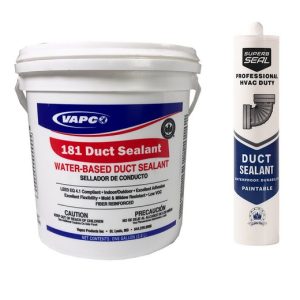
The Core Difference: How They Dry and Cure
At the most basic level, the difference between these two duct sealants lies in their “carrier”—the liquid that keeps the mastic wet and workable in the bucket. Once applied to the ductwork, this liquid must evaporate for the sealant to dry, cure, and form a permanent, airtight barrier.
1. Water-Based Mastic: The Eco-Friendly Industry Standard
Water-based mastics (usually formulated with premium acrylic resins) use water as their primary carrier. As the water evaporates, the acrylic polymers cross-link to form a highly flexible, rubber-like seal.
Because they use water, these sealants have virtually zero VOCs (Volatile Organic Compounds) and no harsh chemical odors. This makes them the absolute go-to choice for indoor applications, residential retrofits, and green building projects (like LEED-certified builds).
Best for: Indoor HVAC ducts, residential installations, school and hospital projects where indoor air quality (IAQ) is heavily monitored.
2. Solvent-Based Mastic: The Tough-as-Nails Weather Fighter
Solvent-based mastics rely on synthetic rubbers dissolved in chemical solvents. As the solvent evaporates, it cures into an extremely rugged, chemical-resistant seal.
Unlike water-based formulas, the curing process of solvent mastic is not easily disrupted by high humidity or freezing temperatures. It bonds aggressively to metal surfaces, even when conditions are far from perfect.
Best for: Outdoor ductwork, rooftop commercial units, industrial exhaust systems, and freezing-weather construction.
Head-to-Head: Which Mastic Wins the Field?
To help you decide which product to stock or spec, let’s look at how they stack up in everyday contracting scenarios.
3. Application & Cleanup: Which is Easier on the Crew?
For high-volume contractors, labor speed and cleanup time are direct cost drivers. This is where water-based mastic wins hands down.
Cleanup: Water-based mastic can be cleaned off brushes, trowels, and hands using nothing but soap and warm water.
Safety: It is non-flammable and non-toxic. Your crew won’t need respirators or heavy-duty ventilation, even when working in tight crawlspaces.
In contrast, solvent-based mastic is much more demanding:
Cleanup: You cannot clean this off with water. Your crew will need mineral spirits or specialized solvents, which adds cost and complexity.
Safety: The fumes are strong, meaning respirators are often required in enclosed spaces. It is also flammable during application, requiring strict storage and handling protocols.
4. Environmental Limits: Can You Apply It in the Cold or Rain?
This is where solvent-based mastic takes the crown.
If you are working on an outdoor rooftop duct system in the dead of winter, a water-based mastic will freeze before the water can evaporate. Freezing ruins the chemical bond, causing the dry sealant to crack and flake off later.
Solvent-based mastic can be applied in temperatures well below freezing (often down to 20°F / -6°C).
Additionally, if it starts raining shortly after application, wet water-based mastic will literally wash away. Solvent-based mastic resists water wash-off almost immediately after it is applied.
5. Long-Term Durability: UV Exposure and Flexing
Once fully cured, both sealants are incredibly durable. However, they age differently:
Water-Based Acrylics: Offer outstanding long-term UV resistance. They remain highly flexible over decades, expanding and contracting with the metal ducts without cracking.
Solvent-Based Rubbers: While extremely tough, certain solvent formulas can dry out and become slightly brittle over many years of direct, intense UV exposure if not coated with a protective layer.
Summary: Which One Should You Buy?
Choosing between them comes down to your workspace and the weather:
Choose Water-Based Mastic if you are working indoors, need to meet strict local VOC regulations, want an easy cleanup, or are working in temperate weather. It is safer, cheaper, and easier to apply.
Choose Solvent-Based Mastic if you are sealing outdoor ducts, working in freezing winter temperatures, or facing high humidity and immediate rain risks. It is a rugged, weather-proof lifesaver when the elements are against you.