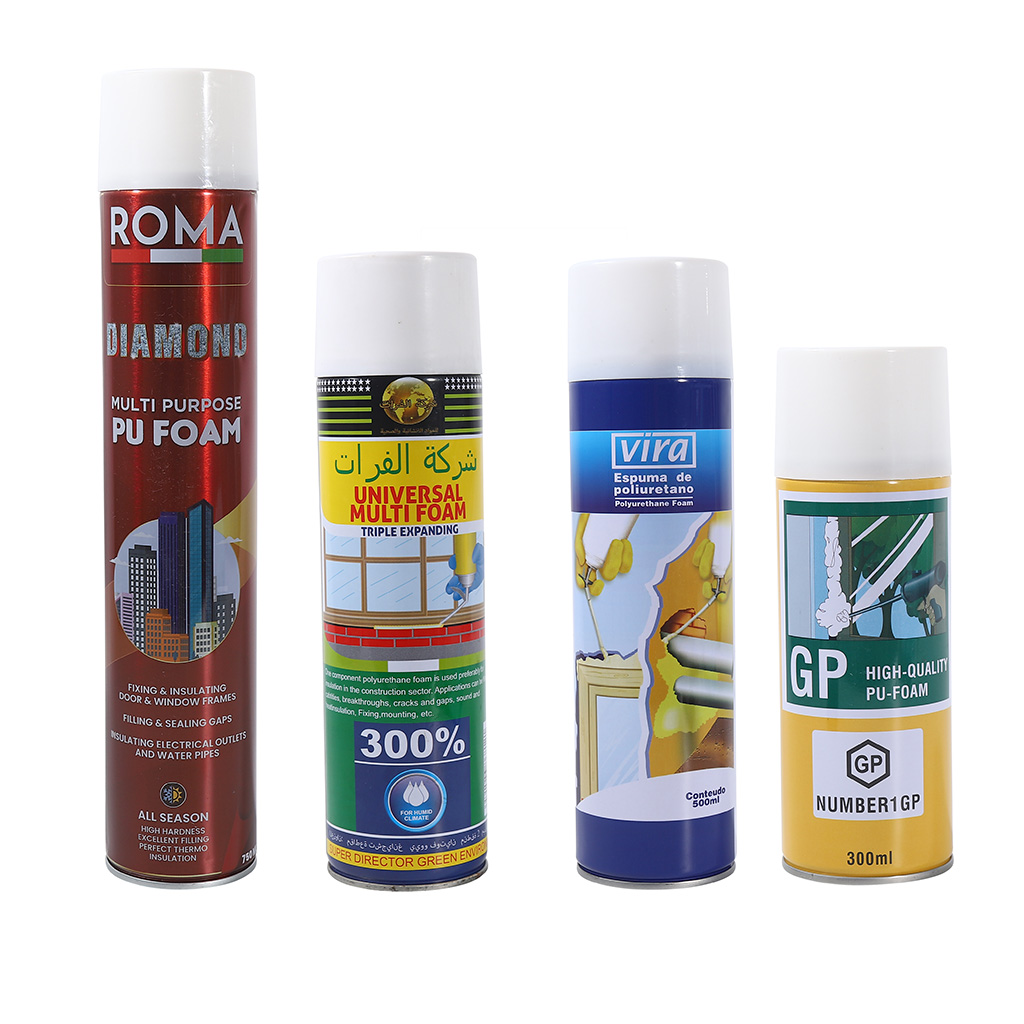
Pu foam spray types:
- PU Foam (Straw Type)– Easy to use for DIY and small jobs
- Gun Grade PU Foam– Professional precision control and reusable
- Fire Rated PU Foam– Fire-resistant for safety-critical applications
- Low Expansion Foam– Ideal for windows and doors
Key Features of polyurethane expanding foam:
- High Expansion Rate– Efficiently fills gaps and irregular spaces
- Easy Application– Available in straw type and gun grade
- Excellent Insulation– Superior thermal and sound insulation properties
- Strong Adhesion– Bonds to concrete, brick, metal, wood, and PVC
- Air Tight Sealing– Prevents air leakage in HVAC systems
- Moisture & Weather Resistant– Suitable for indoor and outdoor use
- Eco-Friendly Options– Low VOC and CFC-free formulations available
Applications of pu foam spray:
1. Construction & Building
- Window and door frame installation
- Wall gap filling and crack sealing
- Roof and wall insulation
2. HVAC & Duct Sealing
- Air duct sealing
- Preventing energy loss in HVAC systems
- Pipe penetration sealing
3. Industrial Use
- Equipment insulation
- Soundproofing applications
- Packaging and void filling
4. DIY & Home Improvement
- Filling holes and cracks
- Sealing around pipes and cables
- Insulating garages and attics
Specifications :
| Property | Value |
| Base Material | Polyurethane (PU) |
| Tack-free Time | 8 – 12 minutes ($25$°C / $50$% RH) |
| Cutting Time | 45 – 60 minutes |
| Full Cure Time | 24 hours |
| Yield (Expansion) | Up to 35–40 Liters (750ml can) |
| Temperature Resistance | $-40$°C to $+90$°C (Cured) |
| Fire Class | B2 / B3 (Available upon request) |
Packaging & OEM Service
- Standard size: 300ml / 500ml / 750ml
- Custom branding available
- Multilingual label design support
- Flexible packaging solutions
How to Use polyurethane Expanding Foam:
- Shake the can well before use
- Clean and moisten the surface
- Apply foam into gaps (fill ~50% as it expands)
- Allow curing and trim excess foam
What is expanding foam used for?
Expanding foam is widely used for sealing gaps, insulating spaces, and preventing air leakage in construction and HVAC systems.
Is polyurethane foam waterproof?
PU foam is water-resistant but not fully waterproof. It can resist moisture but should be protected for long-term exposure.
How long does PU foam last?
Properly applied polyurethane foam can last over 10 years without losing performance.
What is the difference between PU foam and spray foam insulation?
PU foam is the material, while spray foam insulation refers to its application method.