How to use duct sealant
Sealing your HVAC ducts with duct sealant is one of the best ways to boost energy efficiency and keep your system running smoothly. Here is a safe guide.
Step 1: Prep and Clean the Surface
Turn off your HVAC system before you start. You don’t want blowing air messing up your wet sealant or kicking up dust while you work.
Put on gloves and safety goggles to protect skin and eyes. If you’re using a solvent-based product instead of water-based, make sure the room has plenty of ventilation.
Mastic won’t stick to a dirty surface. Use a cloth or wire brush to wipe away dust, grease, and remnants of old tape from all joints and cracks. Ensure the sealant full cured dry before moving on.
Step 2: Apply the Dcut Sealant
There are mainly two packages for the sealant:
Caulking Gun: If your sealant comes in a tube, snip the nozzle at an angle, load it into the gun, and lay down a steady, continuous bead along the seam.
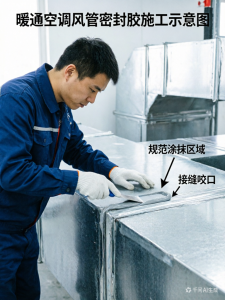
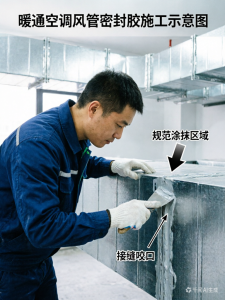
Brush or Putty Knife: For barrel packed sealant, use a stiff brush or putty knife to scoop the paste and press it firmly into the cracks. Don’t just paint it on the surface—force it into the gaps.
Pro-Tip: Make sure the mastic overlaps the joint by at least one inch (2.5 cm) on both sides to guarantee full coverage.
Step 3: Smooth and Reinforce Large Gaps
Smooth It Out: Use your putty knife (or a gloved finger) to smooth the layer. Press down gently to ensure the mastic bonds well with the metal and creates an airtight seal.
Reinforce Wide Gaps:For larger holes or shifting joints, wrap the area with fiberglass mesh tape first, then apply the mastic right over it. This prevents the dried sealant from cracking or sagging over time.
Step 4: Cure and Inspect
Full curing :Give the sealant enougth time to cure—usually a few hours or overnight, depending on the environment (temperature, humidity). Leave the area undisturbed while it dries.
Double-Check:Once fully cured, inspect your work. If you notice any thin spots or missed pinholes, apply a quick touch-up coat to finish the job.
Quick Pro-Tips
Key Focus Areas: Pay extra attention to seams, transverse joints, flange connections, branch take-offs, and where the ducts penetrate walls. These are the most common leak culprits.
Product Choice:Opt for a low-VOC, water-based duct sealant. It’s much easier to clean up, has almost no odor, and keeps your indoor air quality safe.