
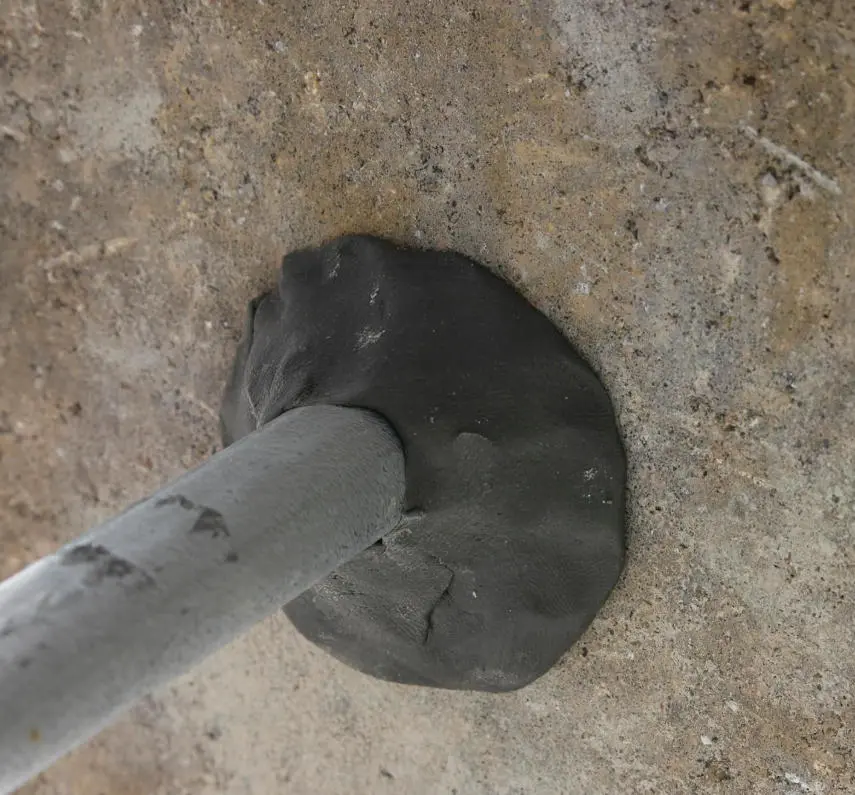
Duct seal putty is a soft, moldable sealing compound used to seal pipe, conduit, and cable penetrations through walls, ceilings, and floors. Electricians and HVAC technicians press it into the gap around a pipe where it enters a building enclosure. The putty conforms to irregular surfaces, blocks air and moisture, and stays removable for future service work.
Duct Seal Putty Defined: Composition, Purpose, and Where It Belongs
What Duct Seal Putty Actually Does
Duct seal putty performs three jobs on a single application. It seals against air leakage around a pipe penetration. It blocks moisture migration through the wall opening. It provides light mechanical anchoring that holds the pipe in position without hardware.
The compound contains mineral oils, fillers, and clay-like binders that stay pliable for years. It does not harden like silicone or caulk. Pull the pipe out tomorrow and the putty comes off cleanly. Reinstall a few years from now and the same compound still works. That re-enterable property makes it a favorite for telecom rooms, data centers, and electrical service panels where cables change regularly.
Common Applications in HVAC and Electrical Work
Contractors use duct seal putty in places where rigid sealants fail. The most common applications include:
- Sealing HVAC condensate line penetrations through exterior walls
- Closing the gap around refrigerant line sets where they pass through sleeves
- Sealing electrical conduit entries into junction boxes and panels
- Blocking drafts around plumbing penetrations in unconditioned spaces
- Sealing low-voltage cable pass-throughs in non-fire-rated walls
For HVAC ductwork joints, duct seal putty works alongside, not instead of, traditional duct sealant. The putty handles the penetration. The sealant handles the seam.
How to Apply Duct Seal Putty Correctly
Application is fast and requires no special tools. Cut off a workable chunk with a putty knife or your hands. Knead it for 10 to 15 seconds to soften the compound. Press it firmly into the gap between the pipe and the wall opening. Build up at least a half-inch thickness around the entire circumference of the pipe. Smooth the surface with a wet finger or damp cloth for a clean finish.
One 1-pound block seals roughly 8 to 12 standard pipe penetrations depending on gap size and fill depth. Cold weather stiffens the putty. Warm it to room temperature before use. Dirty or wet surfaces reduce adhesion. Wipe the contact area clean before application.
Duct Seal Putty vs. Foam and Caulk: When to Choose Each
Duct seal putty is not a substitute for every sealant. Use foam when you need to fill a large void quickly and do not need re-entry. Use silicone or acrylic caulk when you need a permanent, paintable, weather-resistant seal on a static joint. Use duct seal putty when the penetration must stay accessible and the gap is small.
For rigid ductwork flange connections where flexibility under thermal movement matters more than re-enterability, a palduct sealant is the better choice. Match the product to the application and you avoid callbacks.
Key Takeaways
Duct seal putty seals pipe and conduit penetrations in minutes, stays pliable for years, and allows easy rework. It is not a structural sealant or a fire-rated material. Use it for HVAC line set entries, electrical conduit penetrations, and any small gap where air and moisture need to stop but the pipe may need to come out later. One block covers a dozen penetrations. The application requires no tools beyond a knife and your fingers.