
Fiberglass mesh tape and mastic work together as a system, not as alternatives. The tape bridges gaps across a duct seam and gives the mastic a reinforcing substrate to bond to. The mastic seals the joint, resists airflow, and locks the tape in place. Used alone, either one underperforms. Used together, they create a durable seal that holds up under thermal movement and vibration.
Why the Combination Works: Mesh Tape + Mastic Explained
What Each Material Does on Its Own
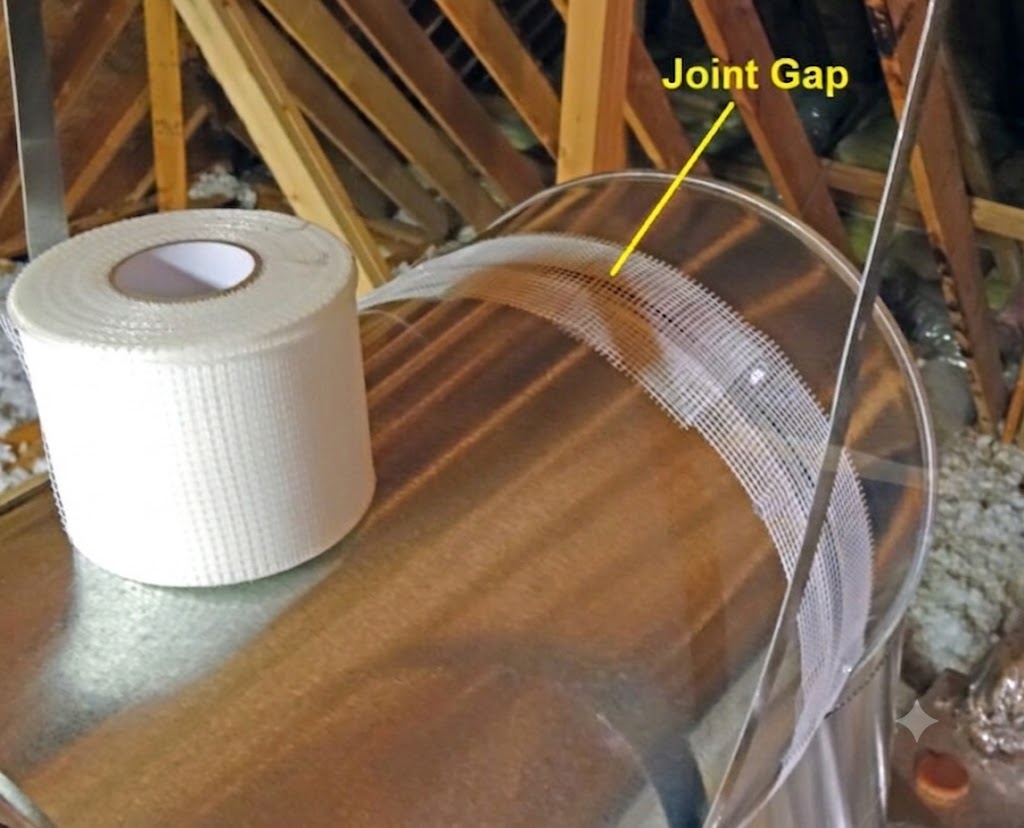
Fiberglass mesh tape is a woven fabric with an open grid structure. On its own, it does not seal. It bridges a gap and provides mechanical reinforcement. Air passes straight through it.
Duct mastic is a viscous sealant brushed or troweled over joints. On its own, mastic bridges small gaps fine. Across wider seams or moving joints, mastic cracks, sags, or pulls away from the substrate as the duct expands and contracts.
Combine the two and the mesh holds the mastic in position across a wider span. The mastic fills the open grid and bonds to the duct surface on both sides. The result is a reinforced, flexible seal that moves with the duct instead of fighting it.
When Mesh Tape Is Required, Not Optional
Building codes and energy standards increasingly call out mesh reinforcement for specific duct applications. SMACNA and ASHRAE 90.1 both reference reinforced mastic systems for higher-pressure duct classes. Use mesh tape on:
- Transverse joints on ducts operating above 1 inch water column static pressure
- Seams wider than 1/8 inch where mastic alone would sag before curing
- Rectangular duct flange connections subject to vibration
- Joints on ducts routed through unconditioned spaces with large temperature swings
- Seams that previously failed inspection or showed cracking
For standard residential ductwork operating at low static pressure, a quality duct sealant applied in two passes is usually sufficient. Reach for the mesh when the job specifies reinforcement or when the joint has already failed with sealant alone.
How to Apply Mesh Tape and Mastic Correctly
Surface preparation matters more than product choice. Wipe the joint clean of dust, oil, and old sealant. Cut the mesh to length so it extends at least 1 inch past each side of the seam. Press the mesh into a thin first coat of mastic applied to the duct surface. Work from one end to the other to avoid wrinkles and air pockets.
Apply the second coat of mastic over the mesh in the opposite direction of the first coat. Two thin coats cure faster and resist cracking better than one thick layer. Total film thickness should reach 30 to 60 mils wet, depending on code and pressure class. Allow full cure before pressure testing.
For flexible duct connections, the same principle applies, but use a flexible palduct sealant designed for vinyl and fabric substrates. Standard mastic does not bond well to flexible duct jackets.
Common Mistakes When Using Mesh Tape With Mastic
Skipping the first coat of mastic underneath the mesh is the most common error. Dry mesh on bare duct shifts as the top coat is applied, leaving voids along the seam edges. Always embed the mesh in mastic, not on top of it.
Using drywall joint mesh instead of true duct mesh is the second mistake. Drywall mesh has a lighter weight and finer grid. It tears under the stress of duct vibration. Use mesh rated for HVAC duty, typically 4×4 or 6×6 weave with a minimum weight of 1.5 oz per square yard.
Pressure testing before the mastic cures invalidates the seal. Most mastics require 24 to 72 hours of cure time at standard room conditions. Cold or humid conditions extend the timeline. Plan the test around the cure, not the schedule.
Bottom Line
Fiberglass mesh tape with mastic is a reinforced sealing system, not a redundancy. The mesh provides the substrate. The mastic provides the seal. Together they handle high-pressure ducts, wide seams, and moving joints that mastic alone cannot. Apply the first coat under the mesh. Apply the second coat over the mesh. Allow full cure before testing. Match the products to the duct type and pressure class. Follow these steps and your seams pass inspection and stay sealed for the life of the system.