
How Much Does Mastic Duct Cost?
Every commercial HVAC contract hinges on material efficiency, compliance, and long-term reliability. Air distribution systems waste up to 30% of thermal energy through unsealed joints. While mechanical fasteners hold ductwork together, air sealing determines overall system performance. Contractors constantly ask: How much does mastic duc cost, and how does it impact job margins?
A standard 1-gallon bucket of water-based mastic duct sealant costs between $5 and $7 from our factory. Bulk 5-gallon buckets cost between $25 and $35, dropping the unit price per gallon significantly. Fiber-reinforced formulations sit at the higher end of that price scale, but they save labor costs on wider gaps.
| Container Size | Average Factory Price | Bulk Contractor Rate | Est. Coverage (1/16″ thick) |
|---|---|---|---|
| 10.5 oz Cartridge | $1.00 – $2.00 | $1.60 – $2.50 | 15 – 20 linear feet |
| 1 Gallon Bucket | $5.00 – $7.00 | $16.00 – $25.00 | 80 – 100 linear feet |
| 5 Gallon Bucket | $25.00 – $35.00 | $52.00 – $70.00 | 400 – 500 linear feet |
Why Field Technicians Choose Mastic Sealant Over Foil Tape
Pressure-sensitive foil tape offers fast application, but field conditions limit its lifespan. Dust accumulation, moisture, and thermal cycling degrade acrylic adhesives over time. Tape fails quickly on dirty sheet metal or damp flex duct collars. A single peeling edge creates major duct leakage, triggering costly callbacks and failed commissioning audits.
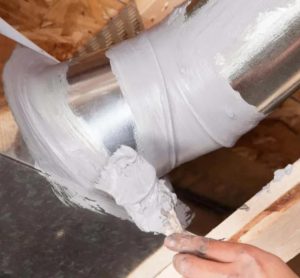
Thick paste mastic creates a permanent, flexible barrier. It bonds directly to galvanized steel, aluminum, and fiberglass duct board. Water-based mastic cures into a durable rubber-like membrane that withstands continuous static pressure changes. It flexes during equipment startup without cracking or losing adhesion.
- Permanent Adhesion: Mastic penetrates metal seams and fills micro-gaps where tape bridges over surface imperfections.
- Chemical Resistance: Quality sealants resist mold growth, humidity, and temperature extremes from -20°F to 200°F.
- Labor Savings on Rough Substrates: Technicians apply mastic smoothly over complex fittings, take-offs, and dampers without tedious measuring or tearing.
Step-by-Step Application Tips to Stop Duct Leakage
Proper surface preparation prevents premature sealant failure and eliminates post-installation leaks. Follow these core application steps on every installation:
- Clean Metal Surfaces: Wipe down sheet metal joints with a fast-drying solvent. Remove oils, metal dust, and shop grease before applying sealant.
- Bridge Wide Seams: Use fiberglass mesh tape over seams wider than 1/4 inch. Apply mastic directly through the mesh to lock joint structural integrity.
- Apply Correct Thickness: Spread mastic to a nickel-thick layer (1/16 inch or 62 mils wet film thickness). Spreading sealant too thin leads to pinhole leaks under high pressure.
- Seal Mechanical Fasteners: Cover all sheet metal screws, rivets, and take-off collar joints thoroughly.
Procurement Strategy: Optimizing Bulk Material Costs
Commercial contractors control supply costs by matching packaging sizes to project scale. Cartridges work best for small retrofits and service calls. Large commercial jobs require 5-gallon pails paired with power-assisted mastic pumps to maximize application speed.
Procurement Rule of Thumb: Calculate 1 gallon of mastic for every 80 to 100 linear feet of 1/16-inch thick coverage. Add a 10% waste margin for field application on complex fittings and dampers.