
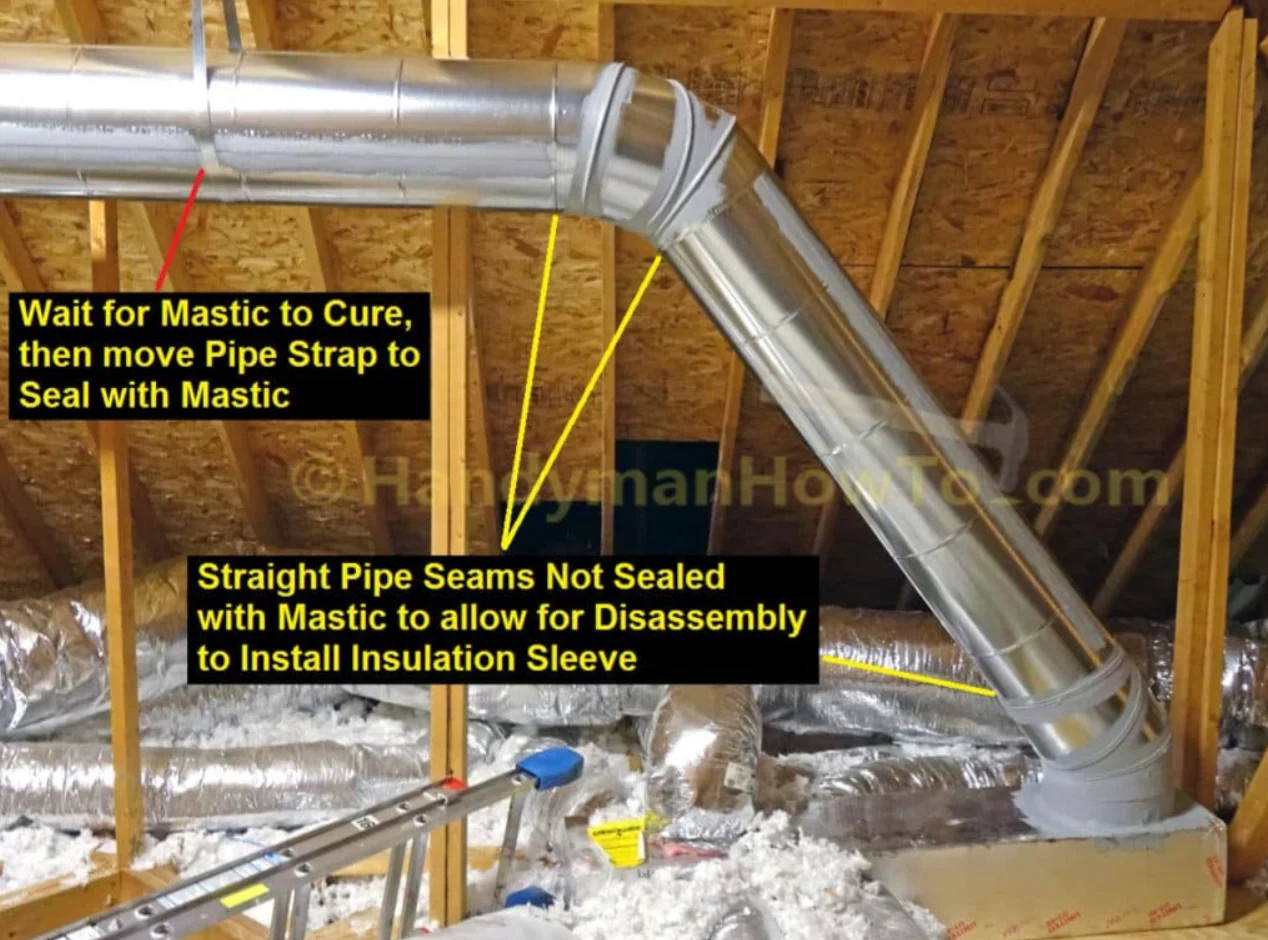
How Long Does Duct Sealant Take to Dry? Mastic Cure Time Guide
Duct sealant is essential for preventing hot and cold air leaks in HVAC systems. When executing a DIY home energy upgrade or managing a commercial HVAC installation, one of the most critical questions installers ask is: How long does duct sealant take to dry?
In short, most standard water-based mastic duct sealants require 20 to 30 minutes to become surface dry (dry to the touch), but they typically take 24 to 48 hours to fully cure before you can safely run the HVAC system at full pressure.
Understanding the difference between drying and curing—and managing the variables that affect this timeline—is the secret to ensuring a long-lasting, airtight seal.
Duct Sealant Drying vs. Curing: Why the Difference is Crucial
Confusing “drying” with “curing” when applying HVAC mastic can lead to premature project failure and air pressure blowouts.
[Application] ──► [Surface Dry: 20-30 Mins] ──► [Fully Cured: 24-48 Hours]
                  (Skin forms / Touch safe)     (Max Adhesion & Flexibility)
Surface Dry (20–30 Minutes)
This is the initial evaporation stage. A thin, non-sticky film or “skin” forms on the outer layer of the mastic. At this stage, the sealant can resist light dust settling, but the interior remains soft, wet, and highly vulnerable to displacement.
Fully Cured (24–48 Hours)
Curing is the complete chemical process where the sealant cross-links and hardens through its entire depth. Once fully cured, the duct mastic reaches its maximum strength, flexibility and permanent adhesion to the galvanized sheet metal.
The Golden HVAC Rule: Never restart your heating or cooling system before the sealant is at least surface dry. Ideally, wait 24 hours. Prematurely running the system introduces high internal static pressure that can easily burst through damp sealant, creating micro-leaks and completely ruining the seal.
Key Environmental Factors Affecting Mastic Drying Time
Duct sealant manufacturers specify drying times based on ideal conditions—typically 21°C (70°F) and 50% relative humidity (RH). The actually environments, such as unconditioned attics, basements, or crawlspaces, will significantly alter these values.
1. Relative Humidity (RH)
Most high-performance duct sealants are water-based formulations that rely on moisture evaporation to solidify. In hot, humid summer conditions, the ambient air is already saturated, which drastically slows down evaporation. High humidity can easily double or triple the touch-dry timeline.
2. Ambient and Substrate Temperature
Warm environments accelerate water evaporation, cutting down dry times. Conversely, cold temperatures slow the process to a crawl. Most industrial manufacturers recommend against applying duct mastic when ambient or substrate temperatures drop below 4°C (40°F), as the curing reaction can stall entirely, leaving the product chalky or brittle.
3. Application Thickness (Wet Film Thickness)
Thicker coats exponentially increase drying time because the initial outer skin locks the moisture inside the deeper layers of the joint.
-
The Pro Standard: Apply a uniform coat approximately 1/16 inch (1.6 mm) thick (roughly the thickness of a coin).
-
For Large Gaps: Do not over-apply mastic to bridge large voids. Instead, embed fiberglass mesh tape into a base coat and topcoat over it.
Comparison: Water-Based Mastic vs. Other HVAC Sealants
Depending on the specific project requirements, the chemical base of your sealant changes the drying behavior:
| Sealant Type | Touch-Dry Time | Full Cure Time | Best Used For |
| Water-Based Mastic (Standard) | 20–30 Mins | 24–48 Hours | Indoor/Outdoor residential & commercial sheet metal ducts. |
| Solvent-Based Mastic | 10–20 Mins | 12–24 Hours | Cold weather applications; high-moisture environments. |
| Silicone HVAC Sealant | 30–60 Mins | 24 Hours | High-temperature areas; sealing plenum joints. |
Professional Tips for a Flawless Duct Sealing Application
To achieve the best industrial-grade results and optimize your sealant’s drying efficiency, implement these three professional best practices:
-
Prep and Clean the Metal Substrates: Mastic will fail to adhere to dusty, oily, or greasy galvanized steel. Thoroughly wipe down metal surfaces with a damp cloth and an HVAC-safe degreaser or solvent cleaner, ensuring the surface is 100% dry before application.
-
Reinforce Gaps Larger Than 1/4 Inch (6 mm): Never rely on mastic alone to span wide gaps. Always wrap the duct joint with heavy-duty fiberglass mesh tape first, then brush or trowel the mastic directly over and through the mesh to create a reinforced composite seal.
-
Strategic Weather Planning: If working in a residential setting, schedule the sealing project on a dry, mild day. This allows you to safely shut off the HVAC system for a 12-to-24-hour curing window without causing extreme indoor temperatures.
Conclusion
While waiting for your duct sealant completely dry, the long-term returns—a quieter HVAC system, optimized indoor air quality (IAQ), and drastically lower energy costs—are well worth the wait. Always check your specific product data sheet (TDS) for exact technical specifications before pressurized testing.